
DHI Hair Transplant
Direct Hair Implantation uses a specialised implanter pen to place prepared grafts. Learn how it works and what to discuss at consultation.
Learn about DHIHome › Treatments › Hair
Understand DHI, FUE and non-surgical options for hair loss in Lucknow, with an individual assessment before any treatment recommendation.
Hair Services
Tap any treatment to jump to a full explanation of how it works, who it suits and what to expect.
Direct Hair Implantation uses a specialised implanter pen to place prepared grafts. Learn how it works and what to discuss at consultation.
Learn about DHIFollicular Unit Extraction — individual grafts are harvested with a micro-punch and placed one by one. No linear scar, minimal downtime, natural hairline design.
Learn moreFUE alongside growth-factor therapy, considered as part of an individual treatment plan.
Learn moreA strip technique suited to advanced grade baldness where a very high graft count is needed in a single session.
Learn moreFill patchy beards, close gaps from scars and design a fuller, even beard line using your own donor hair.
Learn morePermanent restoration for thin or over-plucked eyebrows, drawn to match your natural arch and hair direction.
Learn morePlatelet-Rich Plasma prepared from your own blood, injected into the scalp to reduce shedding and strengthen thinning hair.
Learn moreGrowth Factor Concentrate — a refined, higher-purity alternative to PRP for early hair thinning and post-transplant support.
Learn moreDiagnosis and treatment for female pattern thinning, post-partum shedding and traction alopecia — medical or surgical.
Learn moreNon-surgical pigment micro-dots that mimic hair follicles, adding the look of density or a defined shaved-head hairline.
Learn moreTrichoscopy-based diagnosis, blood work, nutritional correction, mesotherapy and prescription medication to stop ongoing loss.
Learn more
Follicular Unit Extraction
FUE is the technique we use for the large majority of our patients. Individual follicular units are extracted from the donor zone at the back and sides of the scalp using a micro-punch of 0.8–1.0 mm, then implanted one at a time into the recipient area at the angle and direction of your natural hair.
Growth-factor therapy
Bio-FUE combines FUE with growth-factor therapy such as PRP or GFC as part of a treatment plan. Whether this is appropriate depends on the patient's assessment and goals.
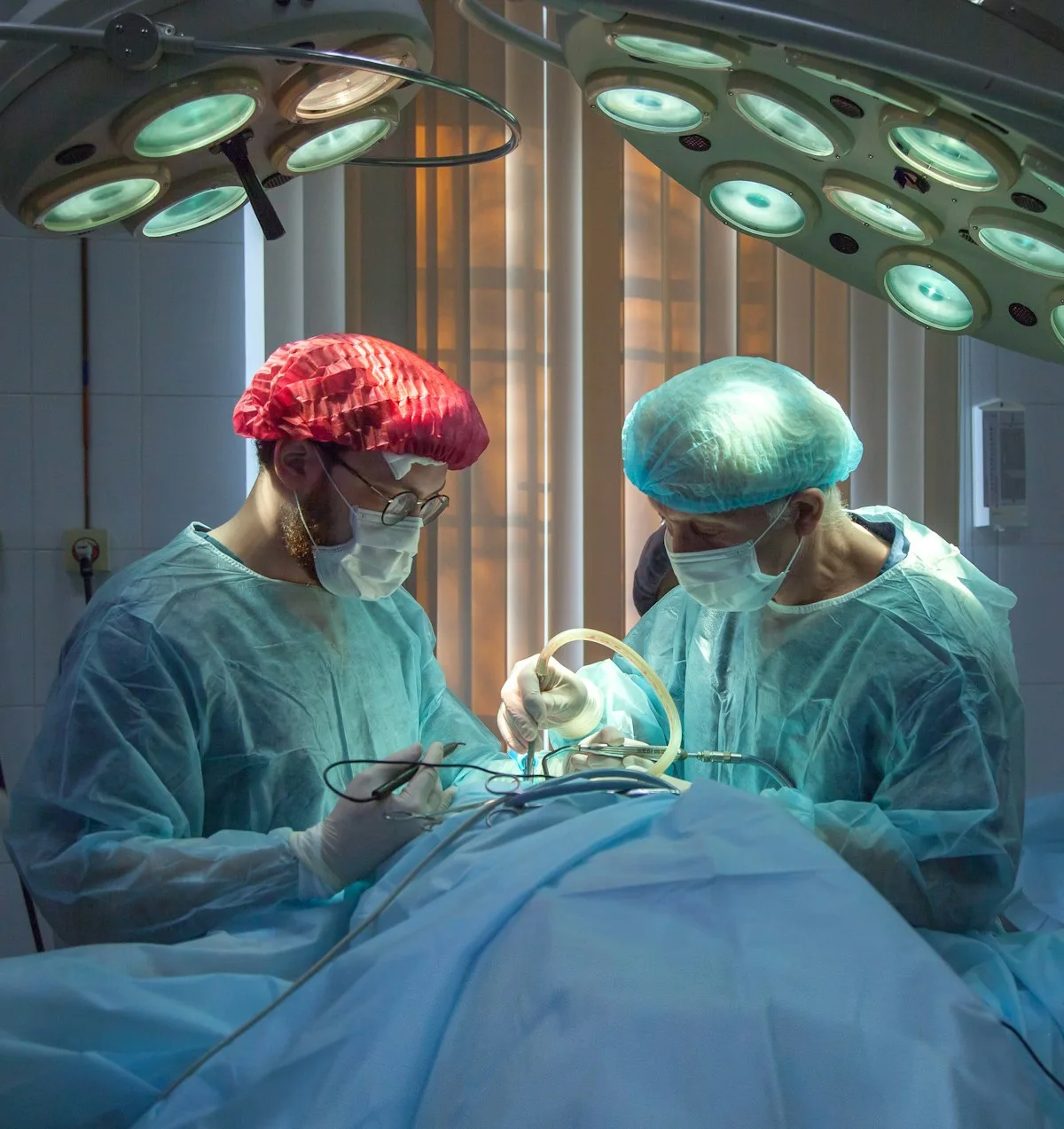
Illustrative stock operating-room image; it does not depict Dr. AP Clinic or a DHI procedure.
Direct Hair Implantation
DHI describes placing prepared hair grafts into the recipient area with a specialised implanter pen. Grafts are commonly harvested using FUE, so DHI refers to the implantation approach rather than a separate extraction method.
The implanter is used to place grafts while controlling their angle, direction and depth. DHI is not suitable for everyone and does not guarantee greater density, faster healing or a particular result. Your hair loss pattern, donor capacity, hair characteristics and goals all inform the plan.
Follicular Unit Transplantation (strip)
In FUT, a thin strip of scalp is removed from the donor area and dissected into individual grafts under a microscope. It is the older technique, but still the right answer for patients with advanced baldness who need a very high graft count and have a loose, high-density donor area.
Facial hair restoration
Patchy growth, gaps from old scars or acne, a thin moustache or a beard line that never filled in — all can be corrected permanently using grafts from the back of your scalp, placed at the acute angle that facial hair naturally grows.
Permanent brow restoration
Years of plucking, threading, thyroid disease or a scar can leave eyebrows permanently thin. Eyebrow transplantation places 150–400 single-hair grafts per brow, each angled almost flat against the skin so the brow lies naturally rather than standing up.
Platelet-Rich Plasma
A small sample of your blood is spun in a centrifuge to concentrate platelets, which are rich in growth factors. The concentrate is injected into the thinning areas of the scalp to reduce shedding, thicken miniaturised hair and support grafts after a transplant.
Growth Factor Concentrate
GFC is a refinement of PRP. The platelets are activated to release their growth factors, and the pure concentrate is injected without the cellular debris present in conventional PRP — giving a higher and more consistent growth-factor dose per session.
Diagnosis-led care for women
Hair loss in women behaves differently to male pattern baldness, and far more often has a treatable underlying cause. We investigate before we treat — thyroid function, ferritin, vitamin D, PCOS and post-partum changes are all checked as part of the workup.
Non-surgical density illusion
Medical-grade pigment is deposited in the upper dermis as thousands of tiny dots that replicate the look of shaved follicles. SMP adds apparent density to thinning hair, camouflages an FUT scar, or creates a clean shaved-head hairline for those who do not want surgery.
Stop the loss before you replace it
Surgery replaces hair you have already lost; medical treatment protects the hair you still have. For most patients the right plan involves both. We use trichoscopy and blood work to build a protocol of prescription medication, topical therapy, mesotherapy and nutritional correction.
What It Costs
Hair transplant cost depends on the technique and the number of grafts you actually need — a published per-graft rate tells you very little until someone has examined your scalp. After your consultation you get a fixed, written quote covering the procedure, medication, dressings and twelve months of follow-up, with nothing added later. No-cost EMI is available.
That is exactly what the consultation is for. We measure, diagnose and tell you honestly what will and will not work for your grade of hair loss.